










Why the gap still exists
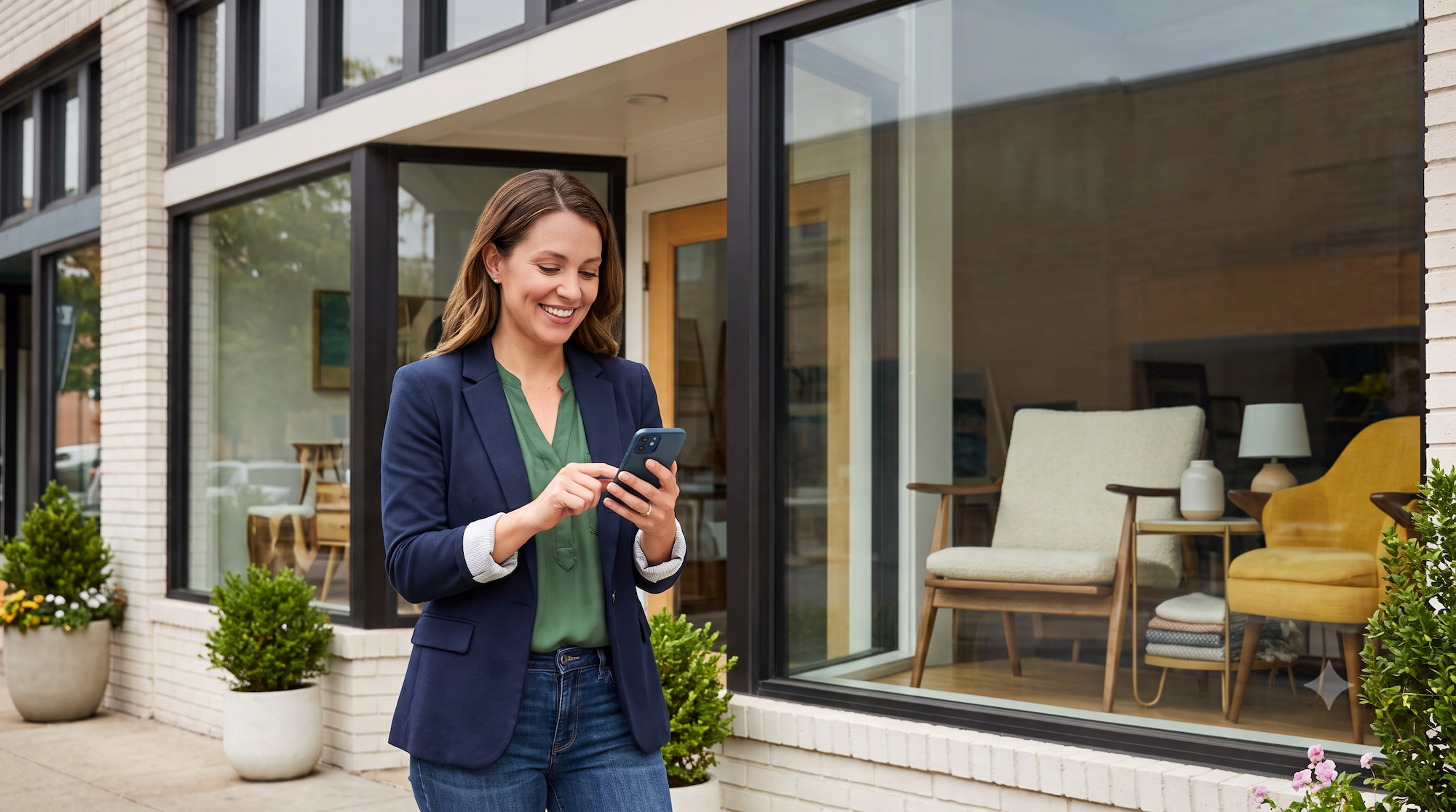
Shopping no longer follows a clean line from advertising to research to purchase. It moves back and forth between a screen and the physical world. A buyer might discover an item on a phone, compare nearby options, check the seller’s credibility, ask whether the product is still available, and decide whether it is worth making the trip—all before leaving home.
Mobile shopping is already a familiar part of that process. Pew Research Center found that 76% of U.S. adults have bought something online using a smartphone. But mobile discovery does not always end with a shipped package. For a local purchase, the phone often helps answer the questions that determine whether someone visits: Is the item available? Is it in the right condition? Is the price firm? Is the business open? Can the item be picked up today?
When buyers can answer those questions online, the store visit becomes more intentional. They are not walking in to begin their research. They are arriving with a product in mind, basic details confirmed, and a clearer reason to buy. The digital experience builds interest and reduces uncertainty; the physical experience lets the customer inspect the item, talk with your team, and complete the purchase.
In other words, digital discovery and physical buying are now one continuous journey.
The new buyer's journey: search locally, buy instantly

Today’s buyer journey is short, local, and intent-rich. A shopper sees a product, checks whether it is nearby, compares price and condition, and looks for proof that the seller is real. If the answers are clear, the shopper moves quickly. If not, the moment is gone. That is why simply “being online” is not the goal. In addition to being easy to find, the goal is being easy to evaluate and easy to act on. When your listings show real inventory, accurate pricing, clear photos, and a direct way to contact you, you reduce hesitation and make it easier to move inventory fast.
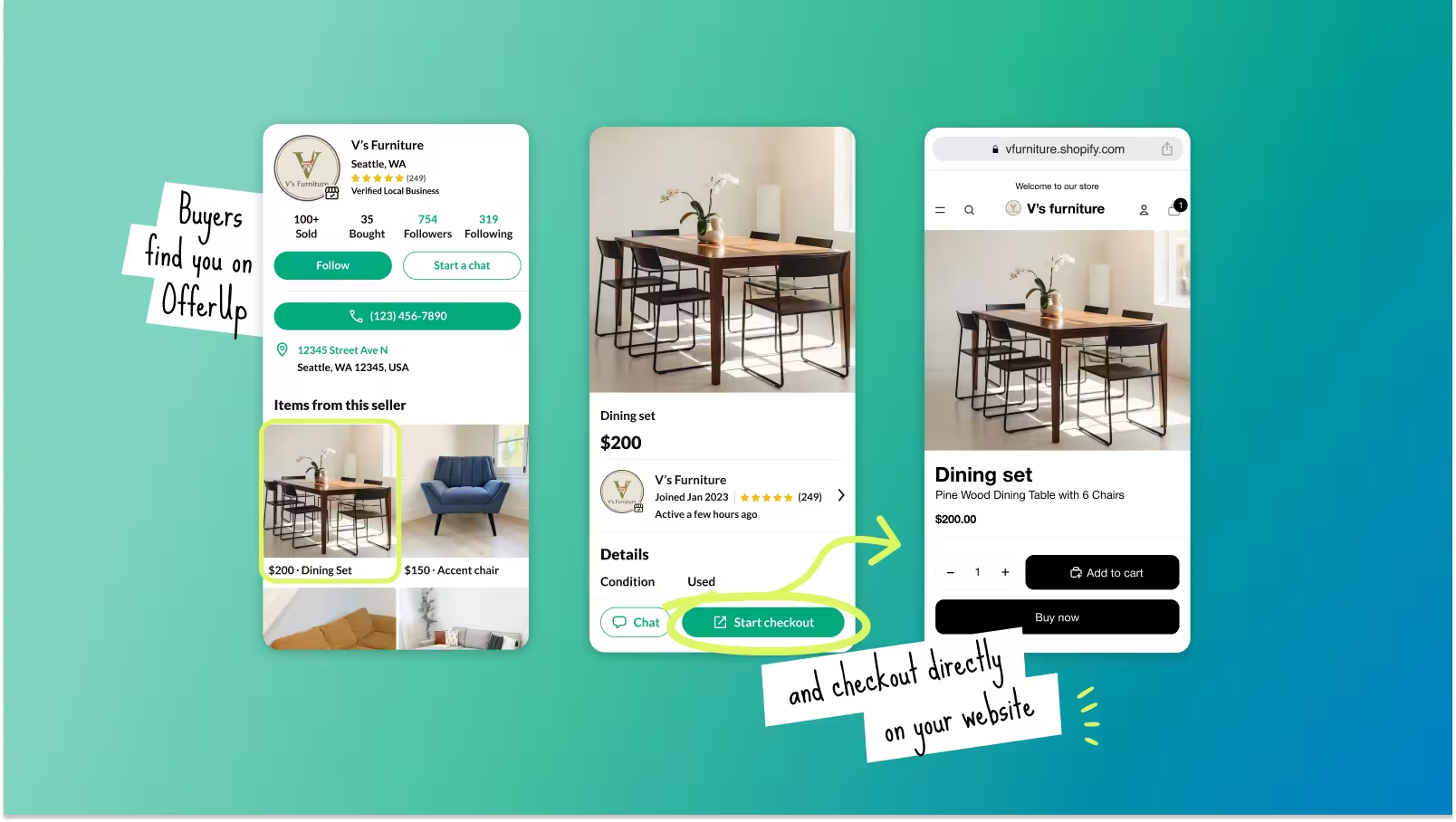
We built OfferUp for Business around that exact behavior. Our Storefronts program gives you a branded mobile storefront, listing bundles to keep your catalog fresh, one-click promotions, Shopify integration, real-time in-app chat, click-to-call, analytics, and tools to manage listings on desktop or mobile. We reach 40 million-plus shoppers nationwide, more than 20% of adults in top markets use OfferUp every month, and our platform facilitates 30 million-plus annual transactions. That matters because a local buyer does not want to hunt for your inventory across three systems. We put your business where local shoppers are already looking.
Digital curb appeal

Buyers decide in seconds whether your business feels credible, current, and worth a visit. That is digital curb appeal. In practice, it comes down to basics done well: clear photos, accurate titles, honest descriptions, correct category placement, real pricing, and item locations that match reality. Clean, accurate listings help shoppers trust what they are seeing before they ever step into your store.
Digital curb appeal also depends on freshness. Old listings signal old inventory. Missing details create avoidable questions. Thin profiles make legitimate businesses look casual. We give you tools to edit listings faster, organize your catalog, promote priority items, and display service features like financing, warranties, shipping, or delivery directly on listings when available. That helps buyers understand not just what you sell, but what kind of buying experience they can expect from you. Maximizing your digital curb appeal turns passive browsers into confident, ready-to-buy customers.
Conversational commerce: turning chats into foot traffic
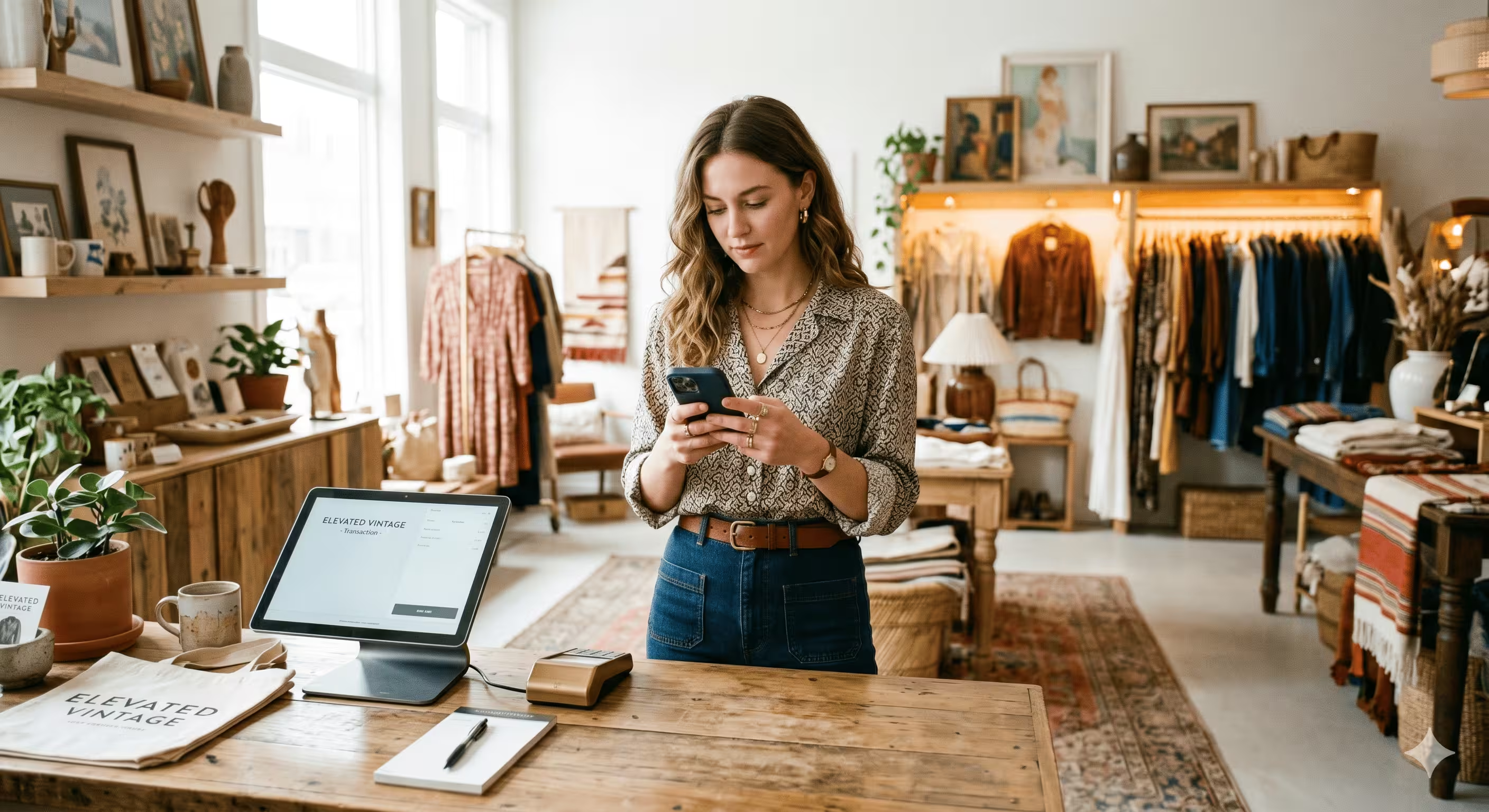
Local commerce is not won by an ad impression. It is won in the moment a buyer asks, “Is this available?” or “Can I see more photos?” or “Can I pick it up today?” That is where conversational commerce earns its keep. Pew’s research shows how natural this behavior already is: many shoppers use their phones while in stores to ask for advice, compare options, and gather reassurance before they purchase. If conversation is part of the decision, then fast answers are part of conversion.
We make that step simple with real-time chat, photo sharing in chat, click-to-call, and quick reply tools that help you rapidly answer and get buyers the information they need without pushing them into a long form or delayed email chain. When a shopper can ask questions and get a real answer fast, online interest becomes an in-person plan much more often.
Avoiding the PPC money pit
Paid search has its place, but local businesses know the downside: you can spend plenty just to rent attention for a few hours. Clicks are not customers. Broad keywords are not buyer intent. And when budgets tighten, PPC often becomes a treadmill that never really stops. The better play is to show up where local shopping intent already exists, keep a real inventory in front of nearby buyers, and use a predictable channel with flat and affordable pricing to drive local foot traffic. That gives you more control over cost and more connection to the actual product-level demand that moves a local business.
We designed our model around that reality. Our Storefronts and Motors messaging is straightforward: grow without paying per click or per lead. Our services offering follows the same principle with unlimited local leads for one low monthly price and no pay-per-lead fees. We also give you one-click promotions on the items that matter most. That lets you prioritize visibility without turning your budget into a slot machine.
How we bridge browsing and buying
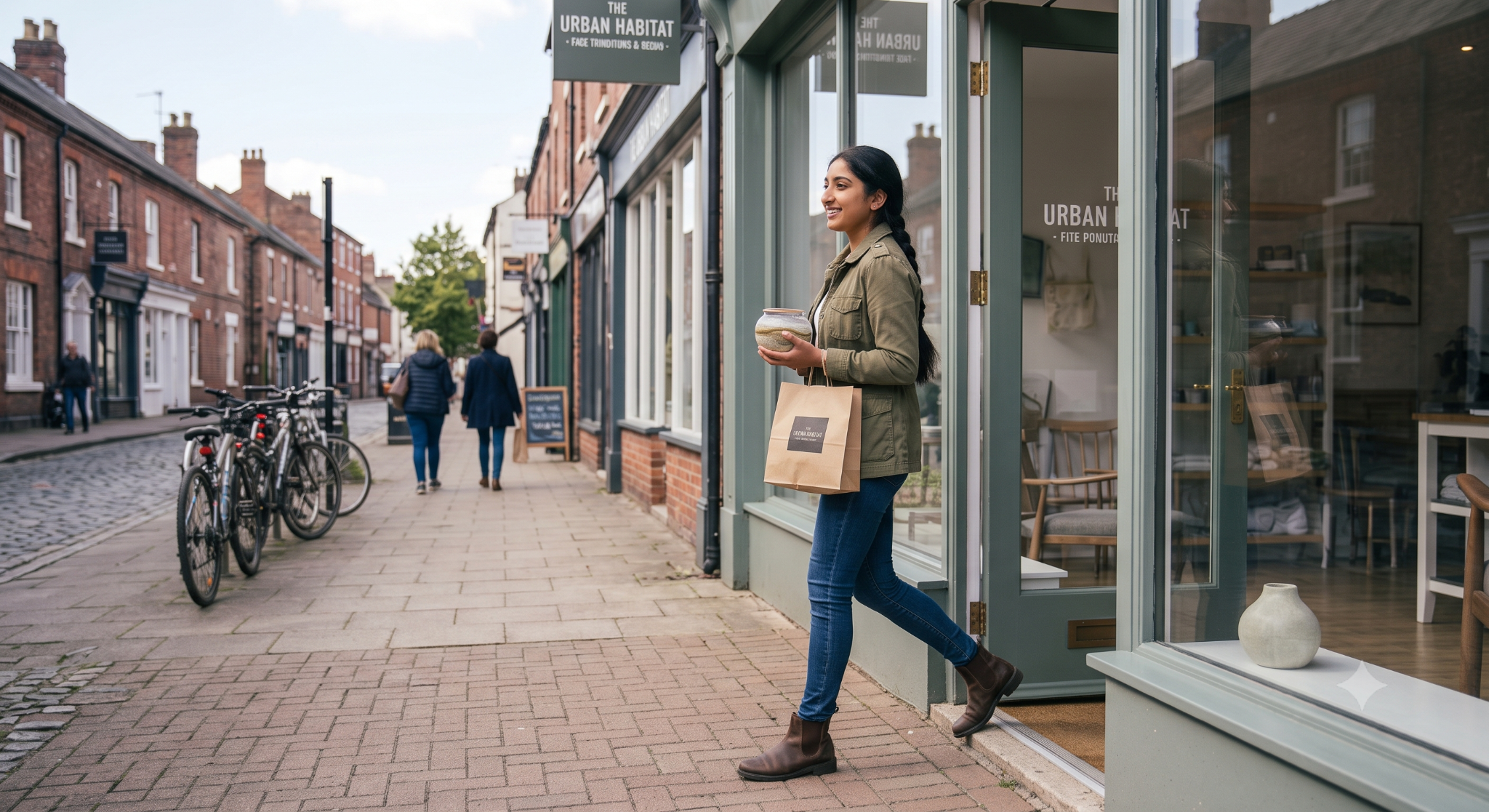
The businesses that close the online-to-offline gap usually do five things well:
- They keep inventory current.
- They make listings easy to scan.
- They answer quickly.
- They show obvious trust signals.
- They remove friction from the handoff between interest and action.
That last part matters most. The handoff can be a chat, a call, a pickup plan, or a same-day visit, but it has to feel immediate. ICSC’s research on click-and-collect shows why: more than half of online shoppers use it, 67% buy additional items from the same retailer when they pick up, and 60% make a purchase at a nearby store. When digital interest turns into a physical trip, there is often more value in that visit than the original item alone.
That is the bridge we are focused on building every day. We help you surface live inventory, present it in a way buyers can trust, promote the right listings, and turn questions into real conversations with local shoppers. We also help you manage the work behind the scenes through our Business Portal tools, performance analytics, and integrations that keep your catalog from becoming a manual headache. Done right, local commerce does not ask shoppers to choose between online convenience and in-store confidence. It gives them both, and that is how you move inventory fast and drive local foot traffic.